The transition to renewable energy sources places significant emphasis on bio-energy, yet many initiatives fail to progress from pilot to scalable operation due to fragmented or incomplete sustainability planning. A truly viable bio-energy system requires more than efficient conversion technology; its long-term success is fundamentally contingent upon a deeply integrated Environmental, Social, and Governance (ESG) framework. The proposed model moves beyond theoretical metrics to detail such a framework, outlining the non-negotiable strategies essential for creating a scalable, sustainable, and operationally sound bio-energy system.
Environmental Stewardship: From Efficiency to Offset
Establishing a scalable and sustainable biomass supply chain requires strict adherence to principles that maximize environmental benefit while ensuring social equity. Achieving this begins at the farm and community level with a Comprehensive Biomass Strategy (CBS). This strategy redefines residue management by first creating surplus through efficiency, then utilizing that surplus for broader energy goals.
1. Stubble Conversion and Soil Health:
Instead of mechanically harvesting the bottom 2–3 inches of crop stubble—an
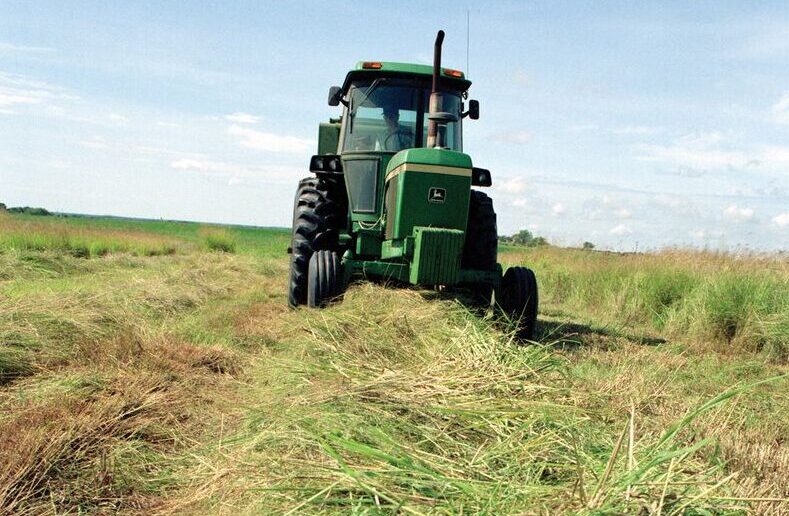
energy-intensive and ecologically damaging practice—the optimal approach is in situ conversion. A fungi-based microbial solution, such as the Pusa Decomposer, is used to accelerate the natural decomposition of the hard lignocellulosic components in the residual stubble. This process rapidly converts low-cut residue into organic manure, typically achieving 70-80% decomposition within 20 to 25 days.
- Air Quality Impact: This approach delivers a substantial environmental co-benefit by reducing major air pollutants associated with stubble burning by up to 80%.
- Nutrient Cycling: The decomposed stubble improves soil organic carbon content (a 5–15% increase) and helps reduce the farmer’s long-term reliance on chemical fertilizers, thereby avoiding nitrous oxide emissions.
2. Demand-Side Efficiency and Surplus Generation:
A significant portion of non-stubble, loose biomass is currently utilized as household fuel for cooking and heating. This utilization is often in traditional, low-efficiency stoves (chullahs), leading to high consumption rates and significant indoor air pollution. Our strategy directly addresses this by introducing high-efficiency, low-emission cookstoves. This intervention achieves two critical goals:
- Social Co-Benefit: Immediately improves rural health by reducing indoor air pollution.
- Surplus Generation: These efficient systems can reduce biomass fuel consumption by 40-60%. This saved biomass is not diverted from a prior use; rather, it is rendered surplus through technological efficiency. This newly-generated surplus becomes the primary, ethically-sourced feedstock for industrial bio-energy conversion.
3. Surplus Utilization and Fossil Fuel Displacement:
The surplus biomass generated from “Demand-Side Efficiency and Surplus Generation “, combined with any additional surplus from Integrated Watershed Management (IWSM)-led productivity, is then utilized to displace fossil fuels.
Every tonne of this dry agricultural biomass (average Higher Heating Value of $16.5 MJ/kg utilized to substitute domestic coal generates a gross offset of approximately $1.50 tCO2e. This offset is now demonstrably Additional, as the feedstock was created through an efficiency gain, not diverted from another use. The project will use certified methodologies (e.g., Verra or CDM ACM0018) to monetize this offset, providing a critical non-subsidized revenue stream.
Social Impact: Rural Income and Community Resilience
The strategy is engineered to deliver direct and measurable social benefits, transforming agricultural waste and inefficient energy use into secure sources of rural income and health.
1. Financial Benefits to Farmers:
The implementation of the in situ decomposition method provides farmers with a direct financial incentive to stop burning residue. The microbial decomposition method has an implementation cost as low as INR 500–800 per hectare, yielding a net economic benefit ranging from INR 4,000–6,000 per hectare. This net gain is realized through improved soil fertility and the subsequent reduction in fertilizer consumption.
2. Employment Generation and Decentralization:
The Bio-H2 (or other bio-energy) conversion process is intentionally decentralized. This structure minimizes logistics risks while simultaneously creating localized employment. Our model achieves this in two distinct layers:
- Layer 1 (Efficiency Deployment): The primary driver of localized employment will be the establishment of a rural workforce dedicated to the manufacturing, distribution, sales, and maintenance of the high-efficiency cookstoves.
- Layer 2 (Surplus Utilization): The surplus biomass generated from this efficiency program will then feed the decentralized processing nodes (3–5 tonnes/day capacity) for bio-energy products.
This two-layered approach is expected to generate approximately 0.5 to 1 million jobs concentrated in rural areas.
3. Climate Resilience and Water Security:
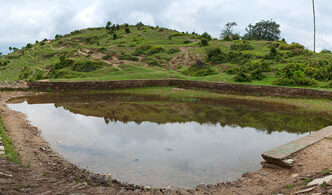
Long-term social and economic resilience is achieved through the integration of Integrated Watershed Management (IWSM) frameworks. These models focus on enhancing natural and social capital through interventions such as rainwater harvesting, in-situ moisture conservation, and groundwater recharge. Proven IWSM techniques, such as the Broad Bed and Furrow (BBF) system, have demonstrated an average 18% increase in crop yields and 30% increase in rainfall use efficiency in semi-arid areas.
Governance: Proactive Compliance and Non-Displacement
1. Proactive Leakage Avoidance:
A primary governance risk in any biomass project is “leakage” where the project diverts biomass from existing essential uses (like cattle fodder or household fuel), forcing existing users to access less sustainable sources, such as forest products.
Our model is designed to proactively eliminate this risk. Instead of simply assessing for surplus, our model actively creates the surplus. By first addressing the community’s demand for household fuel with high-efficiency technology, we are not competing for a resource. We are utilizing the saved biomass, which is verifiably surplus and additional. This strategy solves the leakage problem at its root.
2. Supply Chain Integrity:
Adherence to globally recognized sustainability standards, such as the Sustainable
Biomass Program (SBP) or the International Sustainability and Carbon Certification (ISCC), is mandated to verify that all feedstock utilized is legally, sustainably, and traceably sourced.
For a detailed explanation of how this can be operationally achieved, you may refer to our article here: Click Here to Read